


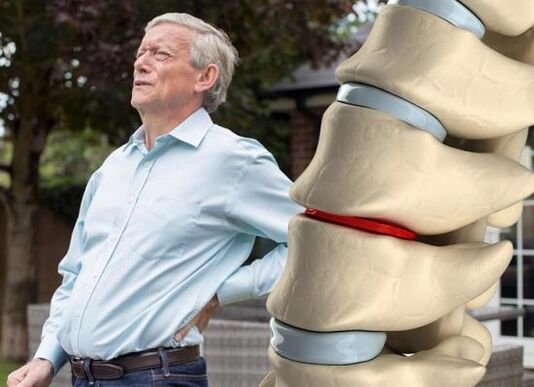
A disease such as osteochondrosis of the back does not exist in modern medicine.First of all, it should be clarified that the term osteochondrosis itself is outdated and does not exist in the current edition of ICD-10.It was replaced by a degenerative dystrophic disease of the cartilaginous tissue of the intervertebral discs.However, we will tell you about osteochondrosis of the back, its symptoms and treatment, because many patients call their disease this way.And they will understand what this article is about.
Thus, osteochondrosis is a degeneration of the intervertebral discs of dystrophic origin.Everything else is indirectly related to this disease.But to understand this process, it is worth taking a small excursion into anatomy and physiology.The main element of the human musculoskeletal system is the spine.With its help, a stable position of the internal organs of the abdominal cavity and chest is ensured.Inside the spine is the spinal cord, a structure that provides vitality to the entire body.The spine provides flexibility to the body, allows you to walk independently and perform all movements with your hands.It is the connection between the head and the limbs.
The spine is made up of individual vertebral bodies.They are connected to each other by joints and ligaments.There are long longitudinal ligaments that begin in the coccyx area and end in the occiput area.There are short transverse ligaments that connect adjacent vertebral bodies.The intervertebral discs are made up of a dense outer covering (annulus fibrosus) which can withstand the most extreme loads.But the annulus fibrosus has a significant drawback: it is completely devoid of its own blood capillary network.It only receives fluid when the surrounding muscles are actively contracting and relaxing.Also, part of the nutrition is provided by diffuse exchange between the intervertebral disc and the vertebral endplate which separates it from the vertebra.
If a person leads a sedentary lifestyle and their back muscles do not work actively and regularly, the annulus fibrosus becomes dehydrated and cracks.At the initial stage, it takes tissue fluid from the nucleus pulposus located inside.This gelatinous body ensures the normal height of the disc and its shock absorption capacity to uniformly distribute the applied loads.
During a long course of this pathological process, the height of the intervertebral disc decreases.It loses its ability to protect the radicular nerves originating from the spinal cord from pressure from adjacent vertebral bodies.They are injured and radiculitis appears (inflammation of the radicular nerves).This is a dangerous condition.The body therefore takes measures to compensate for the loss of capacity of the intervertebral discs.This causes excessive tension in the back muscles.As a result, the diffuse nutrition of the remaining cartilage tissues is even more disrupted.Therefore, osteochondrosis of the back is considered a disease that develops and spreads quickly.Without treatment, it quickly affects all the intervertebral discs and the person becomes disabled.
If you are concerned about back pain related to degeneration of the cartilaginous tissue of the spine, we recommend that you do not wait for it all to go away on its own.See a doctor promptly.Treatment of osteochondrosis without surgery is possible at any stage, with the exception of hernia sequestration.If part of the nucleus pulposus has separated from the intervertebral disc, only surgical intervention can help in this situation.
You can make an appointment with a vertebrologist or neurologist.They will be able to give you an accurate diagnosis and prescribe an effective and safe treatment.
Causes of osteochondrosis of the back
The most common causes of osteochondrosis of the back are physical inactivity, excess weight, sedentary work and refusal of regular physical activity.It is these factors that cause the destruction of the cartilaginous tissue of the intervertebral discs at a young age.Later in life (after age 50), osteochondrosis develops for slightly different reasons:
- hormonal changes leading to the leaching of calcium and phosphorus from bone tissue;
- gerontological degenerative changes in the body;
- disruption of capillary blood flow against the background of atherosclerotic deformations of blood vessels;
- metabolic disorders, such as diabetes or changes in thyroid function;
- age-related decrease in muscle mass;
- changes in posture and curvature of the spine;
- chronic diseases of internal organs that reduce a person's physical activity.
In addition, potential causes of the development of osteochondrosis of the back can be traumatic injuries of the vertebral bodies, their spinous processes, ligaments and tendons.The poor organization of sleeping and working spaces is not negligible.If a person does not attach importance to the position of his body during night sleep, his risk of destruction of the spine and the development of osteochondrosis increases sharply.
You should also stop smoking and drinking alcoholic beverages.These two bad habits cause a disruption of blood microcirculation in the intervertebral discs, which triggers their degenerative dystrophic destruction.
The causes of back osteochondrosis may be related to nutrition and diet.An adult should drink at least 2 liters of clean water per day to maintain fluid and electrolyte balance.In addition, the diet should contain all the vitamins and minerals used in the regeneration of hyaline cartilage, which makes up the fibrous ring tissues.If the diet is dominated by fatty and refined foods, the body quickly begins to suffer from a deficiency of certain nutrients.This does not allow it to restore the integrity of all tissues, including those of vertebrates.
Therefore, during complex treatment of osteochondrosis of the back, a doctor will definitely correct experiment with the patient's diet.She will give him the necessary recommendations regarding the proper organization of his sleeping and working space.
With osteochondrosis, the back muscles experience serious overload.They are responsible for supporting the spine and ensuring the safety of the radicular nerves.With prolonged static tension, the blood circulation cycle in the capillaries changes.The myocytes begin to lack oxygen and an ischemic reaction quickly begins.At first, this causes severe pain in the back muscles.The myocytes then begin to die.Short-term inflammation can occur against the background of muscle tissue necrosis.Then begins the degeneration of muscle fibers.This leads to a number of negative consequences.Patients may develop myofascial pain syndrome.It persists for many years, even after successful treatment of osteochondrosis.
This process cannot therefore be started.When the first signs of osteochondrosis appear, consult a doctor immediately.
Symptoms of osteochondrosis of the back
Osteochondrosis of the thoracic back is the least common, since there is not wide mobility of the vertebral bodies.The height of the intervertebral spaces is also ensured by the fixation of the costal arches.Therefore, we will not consider the symptoms of this type of disease separately.
Most often, osteochondrosis develops in the lumbar region, since it bears the main physical and shock-absorbing load associated with any movement of the human body.Symptoms of pathology include characteristic shooting pain in the lumbar region.It can spread along the inner, outer, or back surface of the thigh and lower leg, extending to the heel or toes.Gradually, neurological clinical signs begin to appear, such as numbness, paresthesias, decreased muscle strength, pallor and coldness of the skin of the lower limbs.
Osteochondrosis of the cervical and cervicothoracic spine is diagnosed no less often.This disease most often develops in people engaged in mental work.With prolonged static tension in the neck muscles, blood microcirculation is disrupted and cartilage tissue is destroyed.
Clinical symptoms with this localization of degenerative dystrophic changes in the cartilaginous tissues of the discs can be more varied.The pain may radiate below the shoulder blade, into the heart area and into the upper limbs.Muscle weakness quickly appears in the arms.There are signs of impaired blood circulation in the posterior vertebral arteries.These are dizziness, decreased mental performance, frequent changes in blood pressure, drowsiness, apathy, etc.
If symptoms of osteochondrosis of the back appear, it is necessary to conduct a series of clinical studies.First of all, x-rays of the affected part of the spine are prescribed.Based on this, the doctor can only make a preliminary diagnosis.A more detailed examination of the condition of the spinal tissues is possible during an MRI examination.Doppler ultrasound, soft tissue ultrasound, biochemical and general blood tests, rheumatic tests, etc.may also be necessary.
What to do and how to relieve pain?
The first thing to do in case of osteochondrosis of the back is to stop all physical activity and give the spine and muscles some rest.In the first days following an attack, it is best to adhere to strict bed rest.Treatment can only be prescribed by a neurologist or vertebrologist.It is not recommended to take medication on your own.Not only can they negatively impact your health, but they can also make it difficult to make an accurate diagnosis in the future.
The only thing you can do to relieve back pain due to osteochondrosis and not harm your health is spinal traction.It is important to restore the normal height of the intervertebral spaces.This will remove pressure on the radicular nerves and any pain will disappear without additional use of pharmacological medications.Traction can be material, manual or using physical exercises.Only a doctor can determine during an examination which method is suitable for your individual case.
How to treat and cure osteochondrosis of the back?
Treatment of osteochondrosis of the back can be carried out exclusively by conservative methods, even at the stage of intervertebral hernia prolapse.Doctors know how to cure osteochondrosis of the back without surgery.For this purpose, osteopathy and massage, therapeutic exercises and physiotherapy, laser therapy, reflexology and much more are used.
Before treating osteochondrosis of the back, the doctor gives the patient comprehensive individual recommendations, the implementation of which eliminates potential causes and risk factors.Then, an individual therapeutic program is developed.During treatment, damaged cartilage tissue is completely restored.If all recommendations are followed, relapses of osteochondrosis do not occur.